
IPTV vs Cable TV in Dubai – Which One Is Better?
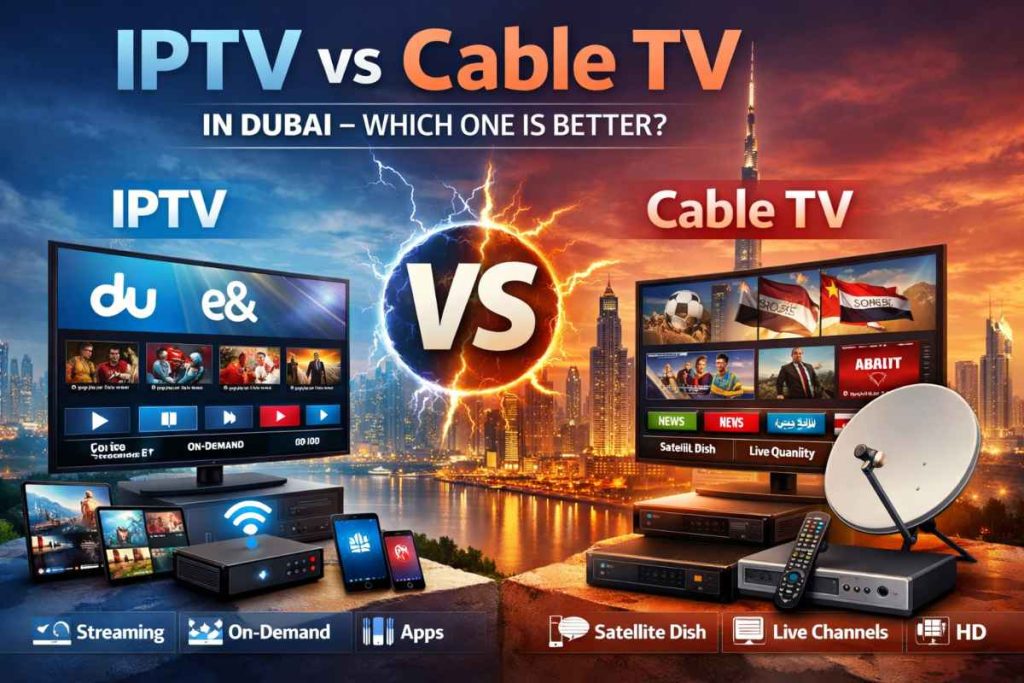
Choosing between IPTV and traditional cable TV in Dubai has become an important decision for many households. With high-speed internet widely available across the UAE, more viewers are exploring IPTV as an alternative to cable television. IPTV offers global entertainment, flexible streaming options, and access to thousands of channels through the internet.
This guide compares IPTV vs Cable TV in Dubai, explaining how each service works, its advantages, and which option provides the best value for viewers who want sports, movies, international channels, and modern streaming convenience.
What Is IPTV?
IPTV stands for Internet Protocol Television, a technology that delivers television content over the internet rather than through traditional broadcast systems like satellite or cable networks.
With IPTV services, viewers can stream live television channels, movies, and on-demand content using smart devices. IPTV platforms typically offer extensive channel libraries featuring global entertainment networks, sports broadcasts, news channels, and movie libraries.
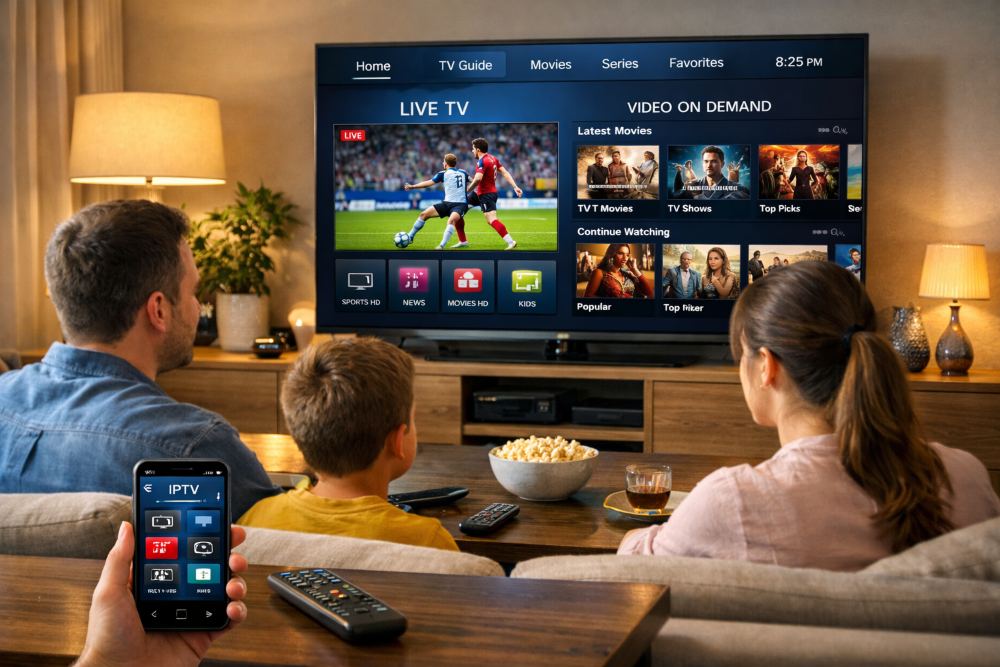
Unlike cable television, IPTV is not restricted to a single television set. Users can watch IPTV channels on multiple devices, including smart TVs, smartphones, tablets, Android TV devices, and IPTV boxes.
Another advantage of IPTV is the ability to access international channels. This makes IPTV especially popular in Dubai, where residents come from many different countries and prefer television from their home regions.
What Is Cable TV?
Cable TV is a traditional television broadcasting system that delivers channels through physical cable networks connected to homes. Cable providers offer predefined channel packages that viewers can watch through a cable box connected to their television.
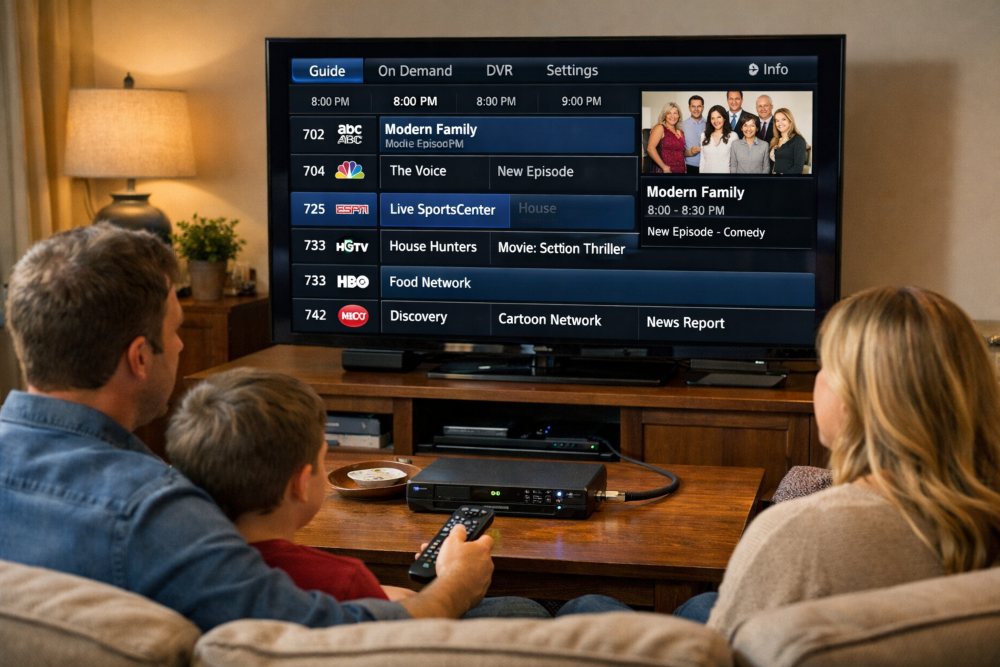
Cable television has been used for decades and is known for its stable signal and reliable broadcasting. However, cable channel packages are usually limited to local or regional networks.
Most cable services also require installation appointments, contracts, and monthly fees that may increase depending on the number of premium channels included in the package.
While cable TV still provides dependable television broadcasting, it lacks the flexibility and global channel access offered by IPTV services.
IPTV vs Cable TV – Key Differences
| Feature | IPTV | Cable TV |
|---|---|---|
| Technology | Streams TV through internet protocol (IP) networks | Delivers TV through wired cable infrastructure |
| Channel Access | Thousands of international channels available | Limited channel packages, mostly regional |
| Device Compatibility | Works on Smart TVs, smartphones, tablets, IPTV boxes, and computers | Usually works only on TVs connected to a cable box |
| Installation | Simple setup with internet and IPTV app | Requires technician installation and cable setup |
| Flexibility | Easy to subscribe, upgrade, or cancel plans | Often requires long-term contracts |
| Content Variety | Includes global entertainment, sports, movies, and international channels | Mostly local or regional channels |
| Viewing Location | Can watch anywhere with internet connection | Limited to home television setup |
| Cost | Usually more affordable subscription plans | Often more expensive monthly packages |
Another important difference is flexibility. IPTV subscriptions are usually easier to start or cancel, while cable TV services often involve long-term contracts.
These technological differences have made IPTV increasingly attractive to modern viewers who prefer the convenience of streaming and larger channel libraries.
Channel Variety Comparison
One of the biggest advantages of IPTV is its large channel selection. IPTV services often provide access to thousands of international channels, including English, Arabic, Turkish, Indian, Russian, and European television networks.
This diversity allows viewers to enjoy global entertainment and stay connected with television from different regions.
Cable TV packages in Dubai generally focus on regional or international premium networks but offer fewer total channels compared to IPTV services.
For viewers who want international sports coverage, foreign-language programming, and global news channels, IPTV provides significantly more variety.
Many IPTV providers also offer video-on-demand libraries that let users watch movies and TV shows whenever they want.
Device Compatibility
Another major difference between IPTV and cable television is device compatibility.
IPTV services support a wide range of devices, allowing viewers to stream content almost anywhere. IPTV channels can typically be watched on:
- Smart TVs
- Android TV devices
- IPTV streaming boxes
- Amazon Firestick
- Smartphones and tablets
- Laptop and desktop computers
This flexibility allows viewers to watch their favourite programs at home or on the go.
Cable TV, however, is usually restricted to televisions connected to a cable box. This limits viewing flexibility and makes it difficult to watch cable content outside the home.
Because IPTV works across multiple devices, it offers a more modern and convenient viewing experience.
Cost Comparison in Dubai
Cost is another important factor when comparing IPTV and cable TV services.
Cable TV packages often require installation fees, equipment rental, and long-term subscription contracts. Premium cable packages that include sports and movie channels can become quite expensive over time.
IPTV services typically offer more affordable subscription plans while providing access to a larger number of channels. Many IPTV services also include international channels and on-demand libraries within their packages.
For viewers looking for a cost-effective entertainment solution, IPTV often delivers more value for the price.
Streaming Quality
Both IPTV and cable television can deliver high-quality video streaming. Cable TV typically provides stable signal quality because it relies on dedicated cable networks.
IPTV streaming quality depends largely on the speed and reliability of the internet connection. With high-speed internet, IPTV can deliver HD and even 4K streaming quality.
Dubai has some of the fastest internet infrastructure in the region, which makes IPTV streaming smooth and reliable for most users.
When paired with a strong internet connection, IPTV services can provide excellent picture quality and seamless playback.
Installation Process
The installation process for IPTV is generally simpler than cable television.
To start using IPTV, viewers usually need:
- A stable internet connection
- A compatible streaming device or smart TV
- An IPTV application or subscription
Once the IPTV app is installed and the subscription is activated, viewers can start watching channels immediately.
Cable TV installation typically requires a technician to install cables and set up the cable box. This process may involve scheduling appointments and waiting for installation.
The simplicity of IPTV setup makes it attractive to users who prefer quick and hassle-free entertainment solutions.
International Channels in Dubai
Dubai is a multicultural city where residents come from many different countries. As a result, many viewers want access to international television channels from their home regions.
IPTV services excel in this area by offering channel libraries featuring networks from Europe, Asia, the Middle East, and North America.
This means viewers can watch Arabic news channels, English entertainment networks, Turkish dramas, Indian Bollywood channels, and European sports broadcasts all within the same subscription.
Cable TV packages often offer limited international channels, which may not meet the needs of viewers seeking diverse programming.
For multicultural audiences in Dubai, IPTV provides a more comprehensive entertainment experience.
Sports Coverage Comparison
Sports fans are another group that often compares IPTV and cable TV services.
Cable providers usually offer dedicated sports packages that include regional sports networks and international sports channels.
However, IPTV services often provide access to multiple sports networks from different countries. This allows viewers to watch international leagues, tournaments, and competitions that may not be included in cable packages.
For fans of football, cricket, basketball, and other global sports, IPTV often offers broader coverage and more viewing options.
Advantages of IPTV Over Cable TV
Many viewers in Dubai are switching to IPTV because it offers several significant advantages compared to cable television.
IPTV provides a larger selection of channels, including international networks that are difficult to access through traditional cable packages.
Another advantage is device flexibility. IPTV allows users to watch television on multiple devices rather than being limited to a single cable box.
IPTV subscriptions are also generally easier to manage and often cost less than premium cable packages.
These benefits make IPTV an appealing entertainment solution for modern households.
When Cable TV Might Still Be Useful
Although IPTV offers many advantages, cable television can still be useful for certain viewers.
Cable TV may be preferred by users who want a simple television setup that doesn’t rely on internet connectivity. Because cable signals are delivered through physical networks, they can remain stable even when internet speeds fluctuate.
Some viewers also prefer the familiarity of cable channel guides and traditional television viewing.
However, as streaming technology continues to improve, IPTV is gradually replacing cable services in many regions.
The Future of Television in Dubai
The television industry is rapidly evolving as streaming technology advances. IPTV services are expected to continue growing as internet infrastructure improves and viewers demand more flexible entertainment options.
Dubai’s high-speed internet networks and tech-savvy population make it an ideal environment for IPTV adoption. Many residents are already transitioning from traditional cable services to internet-based streaming platforms.
As more content becomes available online, IPTV is likely to play a major role in the future of television entertainment in the UAE.
Conclusion
Both IPTV and cable TV offer ways to access television content, but their technologies and features differ significantly. Cable TV provides reliable broadcasting through traditional cable networks, but it is often limited in channel variety and viewing flexibility. IPTV delivers television through internet streaming, allowing viewers to access thousands of global channels and watch content on multiple devices.
For viewers in Dubai seeking international entertainment and sports coverage, along with flexible streaming options, IPTV is often the better choice.
As internet speeds continue to enhance and streaming technology evolves, IPTV is becoming one of the most popular ways to watch television in the modern digital age. Serving Suggestions
This blueberry pound cake is delicious on its own, but it also pairs well with a variety of toppings.
- Serve warm with sugar-free whipped cream
- Add a spoonful of Greek yoghurt for a protein boost
- Spread almond butter on top for extra richness
- Garnish with fresh blueberries for a colourful presentation
These additions make the cake suitable for both breakfast and dessert.
Frequently Asked Questions (FAQs)
What is the difference between IPTV and cable TV?
IPTV delivers television channels through the internet, while cable TV uses physical cable networks to broadcast channels. IPTV allows viewers to stream global content on multiple devices, whereas cable TV is usually limited to televisions connected to a cable box.
Which is cheaper, IPTV or cable TV in Dubai?
IPTV subscriptions are usually more reasonable than cable TV packages. IPTV services often offer thousands of international channels and on-demand content at a lower cost than traditional cable television subscriptions.
Can IPTV replace cable TV?
Yes. IPTV can replace cable TV for many viewers because it offers more channels, flexible streaming, and compatibility with multiple devices, including smart TVs, smartphones, and streaming devices.
Does IPTV provide international channels?
Yes. IPTV services typically include international channels from multiple countries, including English, Arabic, Turkish, Indian, Russian, and European networks.
What internet speed is required for IPTV?
Most IPTV services require a stable internet connection of at least 10 Mbps for HD streaming. For 4K IPTV streaming, a connection of 25 Mbps or higher is recommended.